The History of the Estate
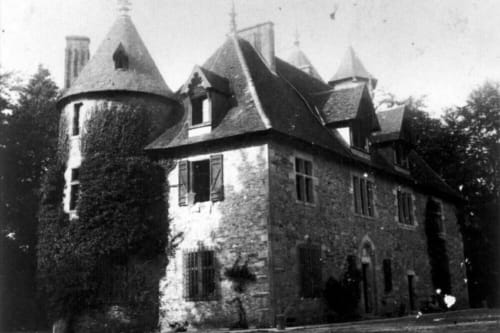
Construction of the Castle
The first references to Montintin appear in a deed of donation dating from the late 11th century, between Gui de Lur and the Abbey of Solignac. It reveals that the estate included a pond, was worked by serfs, and already comprised several permanent dwellings.
In 1675, an inventory mentions a “noble castle” for the first time, detailing the premises, furnishings, and livestock.
Several families successively inherited Montintin: the Lurs, the Jouberts de la Bastide, the Gays de Nexon, the Joussineaus, and the Blanchards.
In the 19th century, Louis Briand, a friend of the painter Jean-Baptiste Camille Corot, renovated it before passing it on to his son.
Just before World War II, it was purchased by his nephew, Louis Dufour de Neuville.
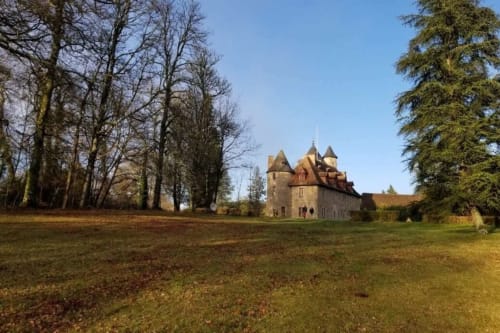
World War II
In June 1940, the unoccupied castle was leased to the OSE (Organization for the Rescue of Children) to house foreign Jewish children fleeing Eastern Europe. The Children’s Home, initially directed by Ernst Papanek, was later managed by Dr. Raymond Levy and his wife, along with educators and local staff.
More than 300 boys, aged 11 to 17, stayed there for periods ranging from a few weeks to several months, participating in activities such as school, woodworking, sports competitions, and theater classes with Marcel Mangel, the future mime artist Marceau.
The roundups intensified, and the home was forced to close. Dr. Levy evacuated the children to other OSE homes, Switzerland, nearby farms, and resistance networks. Jacqueline Bayle, a laundress at the château, took in two of Dr. Levy’s children—an act for which she was named Righteous Among the Nations in 2023 and received the Legion of Honor that same year.
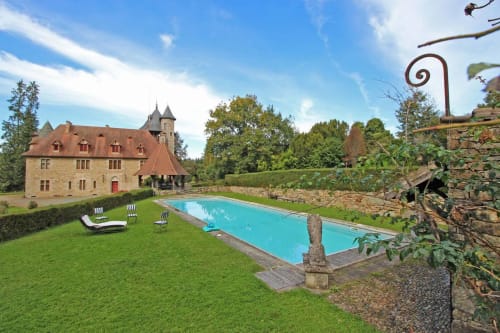
These days
After the war, Montintin reopened under the auspices of the OSE to take in children without families or those returning from deportation. Later, the OSE organized summer camps there and hosted Jewish Scouts.
In the 1980s, Daniel and Anne de Lamaze, searching for a home near the Lamaze family’s historic lands in Allassac, Corrèze, fell in love with the neo-Gothic château.
They undertook extensive renovations to transform it into a warm, welcoming family home, adding 10 bedrooms and 7 bathrooms while preserving the large fireplaces and the monumental staircase. A large swimming pool was built, and an isba on stilts was constructed facing the largest pond.
Montintin became a place for reunions, large summer gatherings around the table, conversations by the fireside, and family vacations filled with shared laughter.